

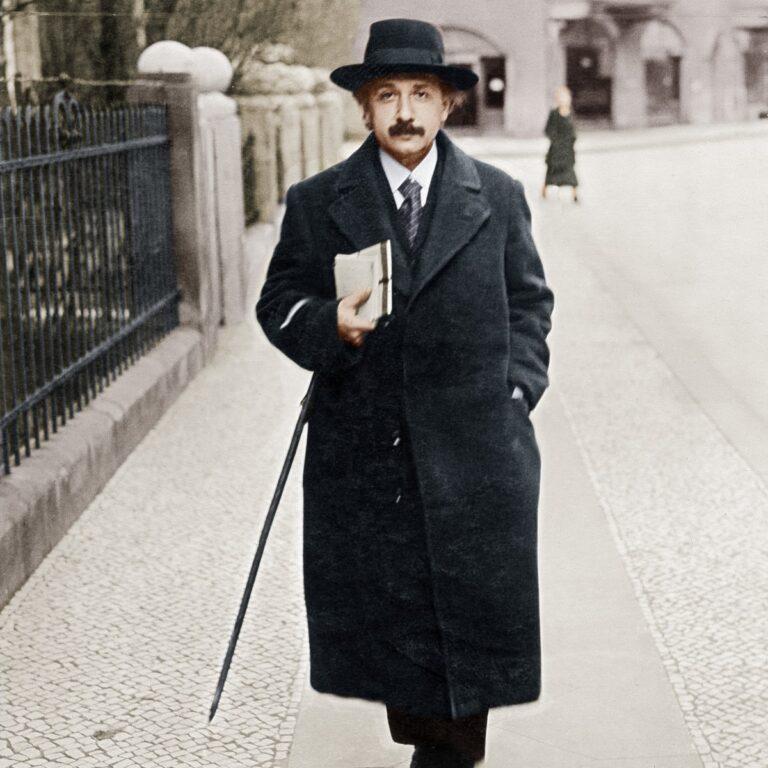

Qureca Launches Quantum Team-Building Program to Strengthen Workplace Collaboration
QURECA introduces its Quantum Team Building Experience to strengthen collaboration, leadership, and problem-solving. The programme combines quantum principles with essential workplace skills, offering custom solutions to help businesses align with future technological growth.

Nord Quantique Secures Long-Term Semiconductor Supply Chain with New Partnerships
Nord Quantique has formed strategic partnerships with C2MI and NY CREATES, ensuring access to specialized semiconductor facilities within the Northeast Semiconductor Manufacturing Corridor. These collaborations will support the fabrication of superconducting and CMOS-based quantum chips, providing the reliability and scalability needed to advance fault-tolerant quantum computing.

University of Sheffield Opens New Facility for Dark Matter and Quantum Research
The University of Sheffield has launched a new ultra-low temperature lab, expanding quantum research and education opportunities. Equipped with Oxford Instruments’ ProteoxMX dilution refrigerator, the facility will support dark matter detection and qubit research. Students and researchers will gain hands-on experience in quantum instrumentation, preparing them for future careers.
Dynex Targets 25% Market Share in Quantum Computing by 2034
Dynex has announced a 10-year plan to transition from GPU emulation to silicon quantum chips, aiming for 25% market share by 2034. The strategy includes the launch of the Apollo Silicon Quantum Chip in 2025, scaling to 1 million qubits over the decade. A $50 million venture capital round will support the company’s growth and partnerships across industries.

Qunova’s HiVQE Algorithm Achieves Chemical Accuracy on NISQ Systems
Qunova Computing’s HiVQE algorithm achieved chemical accuracy across multiple quantum systems, marking significant progress in quantum chemistry. Tested on IQM, IBM, and AQT processors, the solution demonstrated hardware-agnostic performance. With fewer qubits required, Qunova’s algorithm offers a practical path toward quantum advantage in chemical computations.

EuroHPC Signs Contract for Quantum Computer Installation in Germany
The EuroHPC Joint Undertaking has partnered with IQM Quantum Computers to install the Euro-Q-Exa system at the Leibniz Supercomputing Centre in Germany. The project includes two systems, with 54 and 150 qubits, planned for 2025 and 2026. This initiative aims to expand Europe’s quantum capabilities through hybrid computing solutions.
AliroNet Quickstart Launches to Build Secure Quantum Networks with Entanglement
Aliro has introduced AliroNet Quickstart, a bundled solution for building secure quantum networks using entanglement. The product offers configurable environments for piloting communication networks while combining classical and quantum security methods. AliroNet Quickstart provides flexible options for networking quantum processors, sensors, and secure communication systems.

Altair and Technical University of Munich Introduce Quantum Algorithm for CFD
Altair and the Technical University of Munich introduced a quantum algorithm for CFD, demonstrating improved scalability and efficiency. The research offers practical applications for industries relying on complex fluid dynamics simulations. This quantum-based approach marks a shift toward integrating advanced computing methods to solve large-scale industrial challenges.

Artilux and Dr. Richard Soref Advance Room-Temperature Photonic Quantum Computing
Artilux and Dr. Richard Soref have introduced a room-temperature photonic quantum computing platform using GeSi SPADs. This development eliminates the need for cryogenic cooling, reducing operational complexity and costs. The new platform enhances scalability and broadens practical applications for quantum technologies.